How Do Air Scrubbers Improve Indoor Air Quality During Restoration?
During fire damage restoration, the visible debris is only part of the problem. Smoke, soot, and moisture from suppression efforts generate microscopic pollutants that stay suspended in the air and migrate throughout the building.
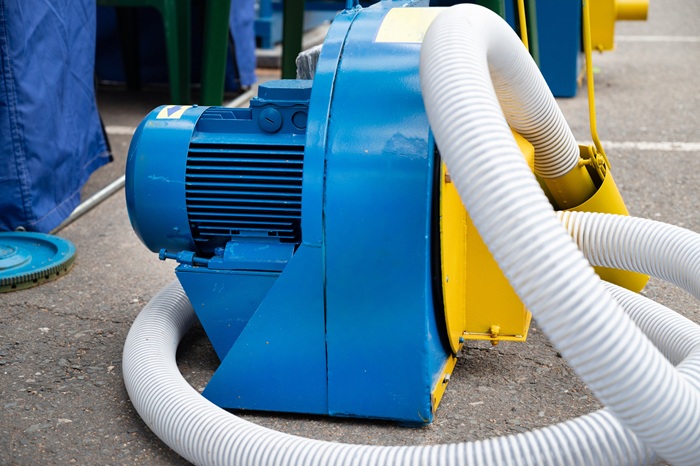
Air scrubbers are designed to pull this contaminated air through staged filtration – typically including pre-filters, HEPA filters, and sometimes activated carbon – to reduce particulate load and odor-causing compounds while restoration work is underway. By continuously cycling the indoor air through high-efficiency filters, air scrubbers help stabilize indoor air quality, support safer working conditions, and limit the spread of secondary contamination to areas that were not directly burned.
When negative air pressure is used with ducted air scrubbers, airflow is directed from clean zones toward the work area, which helps prevent soot and fine particulate from escaping containment. This same equipment, often referred to as air filtration devices or negative air machines, plays a key role in limiting secondary damage like corrosion, staining, and microbial growth by keeping airborne residues under control while structural materials are being dried.
As we explore how air scrubbers improve indoor air quality during fire damage restoration, we will look at common types of secondary damage, why timing is so critical, how to prevent mold and corrosion, what actually happens when soot contacts building materials, and why ventilation and filtration strategies matter as much as surface cleaning.
How Fire Incidents Lead to Multiple Forms of Secondary Damage
After a fire is extinguished, a building enters a second phase of risk where damage continues to develop even without active flames. One major category is smoke and soot residue, which is often acidic due to combustion byproducts such as sulfur and nitrogen oxides.
When these residues absorb moisture from the air, they form weak acids that can etch glass, tarnish metals, and stain plastics and painted finishes within hours to days if not neutralized. Porous materials such as drywall, insulation, and unfinished wood readily absorb these combustion byproducts, which leads to persistent odors and long-term discoloration even after surface cleaning.
Water and moisture from firefighting efforts introduce a second class of secondary damage. Structural materials like drywall, oriented strand board, subflooring, and framing can stay wet long after visible standing water has been removed. Under typical indoor conditions, mold can begin to colonize damp materials within roughly 24–48 hours, which turns a fire loss into a combined fire and mold loss if drying is delayed.
In the same time frame, metals exposed to a mix of moisture and acidic soot begin to oxidize, leading to rust, pitting, and loss of protective coatings. Electronics and low-voltage systems are particularly vulnerable to conductive residues, and corrosion can cause shorts, malfunctions, and latent failures weeks or months after re-occupancy.
A third group of secondary effects involves building systems and contents. Smoke particles travel wherever air can move: through HVAC ductwork, chases, wall cavities, ceiling plenums, and insulation. If these spaces are not addressed, soot can continue to redistribute each time the air handler cycles, degrading indoor air quality and prolonging odor problems.
Air scrubbers, when placed correctly and operated long enough, reduce the airborne particle load that contributes to this redistribution, but they must be paired with physical cleaning, source removal, and proper HVAC handling to arrest the full chain of secondary damage that follows a fire incident. As part of a broader restoration strategy, understanding these damage pathways helps set priorities for containment, air filtration, and material triage.
Why Immediate Fire Damage Restoration Protects Indoor Environments
The first hours and days after a fire often set the ceiling for how much of the structure and contents can be saved. Soot residues start interacting with surfaces almost immediately.
Light-colored plastics and painted finishes can yellow within hours; metals such as chrome, copper, and aluminum begin to tarnish and corrode; glass can develop etching that is difficult or impossible to polish out if residues are left in place. The longer these residues remain, the deeper they penetrate into porous coatings and substrates, which increases labor, chemical usage, and the likelihood that replacement rather than restoration will be required.
Moisture behaves on a similar clock but in different ways. Firefighting water migrates laterally and vertically through building assemblies, saturating drywall, insulation, flooring systems, and concealed cavities. Within roughly 24–48 hours, conditions that support mold growth are present on many common materials, especially where relative humidity exceeds about 60%.
Rapid extraction, dehumidification, and air movement reduce the time materials spend in a high-moisture state, which lowers the probability of widespread microbial growth and the need for later mold remediation. Early action also helps stabilize dimensional changes in wood products, limiting warping, cupping, and splitting that would otherwise require more extensive carpentry and structural repairs.
From an indoor air quality perspective, prompt restoration work and early deployment of air scrubbers are central to controlling exposure. Combustion produces a mix of fine particulate matter (often below 2.5 microns in diameter), semi-volatile organic compounds, and gases that can stay airborne or re-aerosolize during cleaning. High efficiency particulate air (HEPA) filters, by definition, remove at least 99.97% of particles 0.3 microns in size, with equal or better efficiency for many larger and smaller particles.
When air scrubbers equipped with HEPA and optional carbon stages are run continuously in containment, the airborne load of lung-penetrating particles and odor-causing molecules is systematically reduced. This matters for worker exposure, reoccupancy timelines, and the probability that residues will redeposit on freshly cleaned surfaces.
Preventing Mold, Corrosion, and Long-Term Deterioration After a Fire
Preventing mold growth after a fire starts with moisture control. Firefighting water and sprinkler discharge often leave wall cavities, subfloors, and insulation wet even after surfaces appear dry. Multiple public-health and building guidelines emphasize that porous materials should be dried or removed within roughly 24–48 hours to reduce the risk of mold amplification.
This requires coordinated extraction, removal of unsalvageable materials, targeted demolition to open wet cavities, and deployment of dehumidifiers and air movers to bring humidity and material moisture content down to acceptable levels. Monitoring with moisture meters and psychrometric calculations is necessary so drying decisions are based on actual data rather than appearance alone.
Corrosion prevention focuses on interrupting the interaction between acidic soot residues, moisture, and vulnerable substrates. Metals used in appliances, fixtures, mechanical equipment, and electronics are particularly sensitive. In many cases, the first step is dry removal of surface soot by vacuuming with HEPA-filtered equipment, followed by carefully selected cleaning agents that neutralize acids without introducing excessive moisture.
For electronics and precision equipment, manufacturers’ guidance and specialized decontamination processes are often required, since inappropriate cleaning can push conductive residues deeper into components or strip protective coatings. Maintaining relative humidity in a controlled range during restoration not only limits mold risk but also slows ongoing corrosion reactions.
Air management ties these goals together. Air scrubbers reduce airborne spores that might settle on newly exposed wet materials, and they capture fine soot particles before those particles can deposit on metals and electronics. The IICRC’s draft S700 fire and smoke damage standard defines these units as air filtration devices and notes that HEPA-equipped air scrubbers reduce suspended fire particulate and can be configured as negative air machines to manage pressure differentials.
When combined with controlled ventilation that introduces appropriate amounts of outdoor air, these systems help maintain lower particulate concentrations and more stable humidity during drying. Over the long term, successful projects are those where moisture was removed quickly, corrosive residues were neutralized early, and airborne contaminants were kept in check throughout the restoration cycle.
The Chemistry of Soot and Its Long-Term Interaction with Building Surfaces
Soot is a complex mixture rather than a single substance. It includes carbonaceous particles, unburned or partially burned organic compounds, metals, and inorganic salts. Its composition depends on what burned (for example, wood, plastics, textiles, or synthetic polymers) and on combustion conditions.
Protein fires, plastic fires, and petroleum-based fires each leave residues with different adhesion, acidity, and odor characteristics. In many building fires, soot particles in the submicron range stay suspended for extended periods, which increases both inhalation exposure and the chance that they will enter cracks, pores, and micro-textures on surfaces.
When soot contacts surfaces, physical and chemical processes begin to lock it in place. Electrostatic forces and mechanical entanglement cause fine particles to cling to rough or fibrous materials such as unfinished wood, acoustic ceiling tiles, and textiles. At the same time, many soot residues are hygroscopic – they attract water from the air – and contain acidic components.
With time and sufficient humidity, these residues can etch glass, dull glossy finishes, and damage protective coatings on metals. This is why delays in cleaning often result in permanent staining on countertops, bathtubs, window frames, and appliances, even if the fire did not physically damage those items.
From an indoor air quality perspective, soot that is not removed at the source can be re-entrained repeatedly. Each time doors are opened, workers move through the space, or air currents shift, fine particulate is lifted back into the breathing zone. HVAC systems amplify this effect if they are running before they have been inspected and cleaned.
Air scrubbers with true HEPA filtration reduce this reservoir by capturing particles on each pass through the unit, but they must be sized correctly for the volume of air, placed to promote efficient circulation, and operated long enough to process multiple air changes in the affected zone. Air sampling or qualitative particle counting can be used in some projects to verify that airborne particulate levels are trending downward as cleaning progresses, which provides better assurance that the long-term impact of soot on both surfaces and indoor air has been addressed.
Ventilation, Air Scrubbers, and Filtration in Fire Damage Cleanup
Effective air management in fire damage cleanup combines three elements: dilution with outdoor air, capture through filtration, and control of airflow patterns with pressure management.
Ventilation alone – for example, opening windows and running exhaust fans – can reduce concentrations of some gases and volatile organic compounds, but it does little to capture particulate unless the airflow is directed through filters. Air scrubbers bridge this gap by drawing contaminated indoor air through staged filtration, often including a pre-filter to protect the main filter, a HEPA stage for fine particulate, and an optional carbon or other sorbent stage for odor-causing gases.
When these units are configured as negative air machines and ducted outdoors, they create a slight pressure difference that pulls air from adjacent spaces into the work area. This pressure relationship keeps soot, dust, and other contaminants from migrating into clean zones and helps confine odors.
Guidance in fire and smoke restoration standards notes that air filtration devices can both reduce airborne contaminants and establish negative or positive pressure within containment, and that make-up air sources must be considered so pressure remains stable. Combining this with appropriate mechanical or natural ventilation produces a system where outdoor air dilutes residual gases while filtration removes particulate before air is exhausted or recirculated.
Air scrubbers also interact with other environmental controls. During aggressive cleaning, demolition, or insulation removal, airborne particulate spikes significantly. Properly sized HEPA air scrubbers intercept these bursts, which reduces redeposition on freshly cleaned surfaces and lowers short-term exposure for workers. In wet environments, running scrubbers alongside dehumidifiers supports both air quality and drying by keeping filters free of large debris and maintaining circulation through the space.
How CCS Cleaning & Restoration Supports Safe, Air-Focused Fire Restoration
Fire damage recovery in southern Minnesota often involves a mix of structural repairs, contents handling, water damage mitigation, and detailed air quality management. CCS Cleaning & Restoration approaches these projects with IICRC-trained teams, professional-grade air scrubbers and dehumidifiers, and procedures aligned with current fire and smoke restoration standards.
For property owners and facility managers, having a single restoration partner that can manage fire, water, mold, and air quality saves time and reduces coordination gaps. Call CCS Cleaning & Restoration at 507-334-1774 to discuss fire incidents where smoke, soot, and airborne contaminants are a concern, or contact us online for any other questions!